Investigating Time of Day Effects on Payout Ratios for Progressive Slot Networks Worldwide
Written by Jakob Sullivan · May 16, 2026
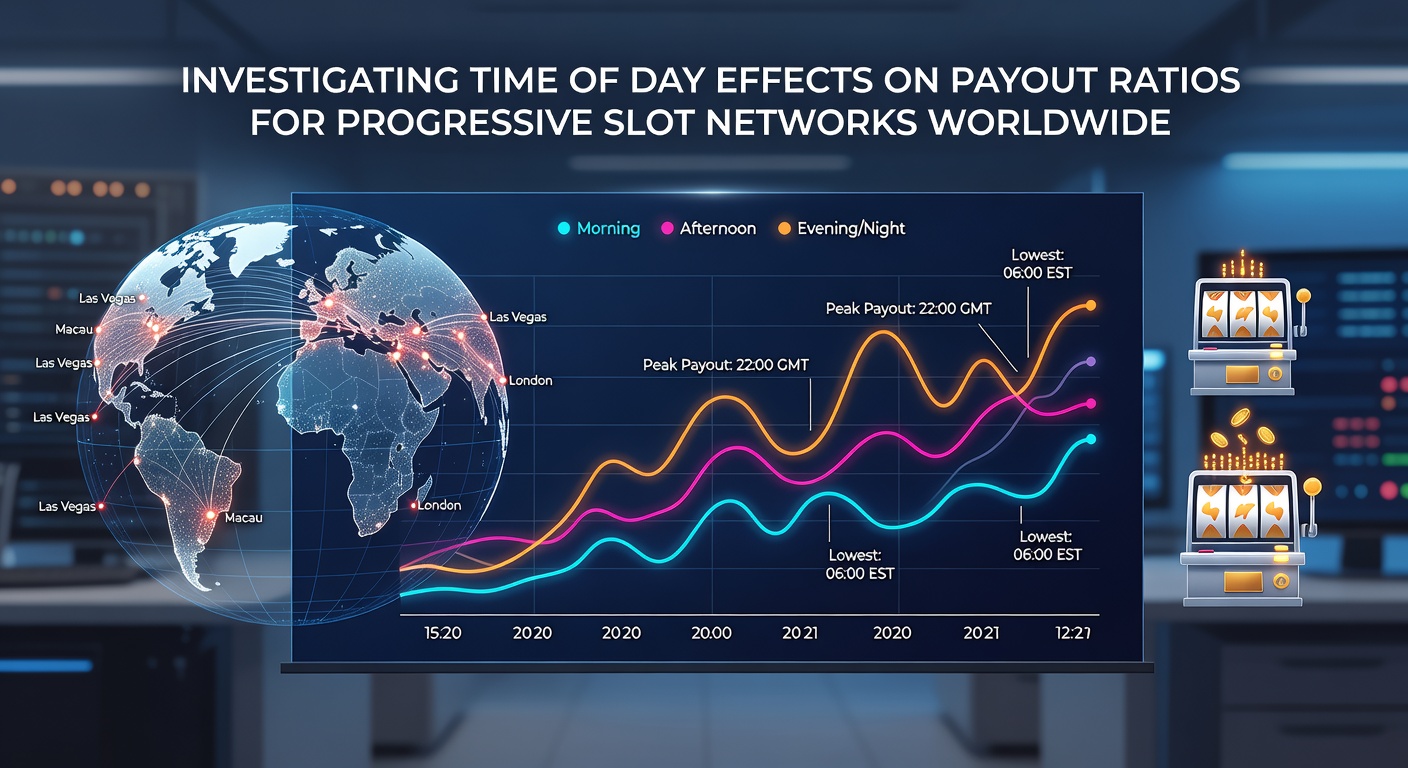
Investigating Time of Day Effects on Payout Ratios for Progressive Slot Networks Worldwide
Progressive slot networks link machines across casinos and sometimes entire jurisdictions so that a small percentage of each bet feeds into a shared jackpot pool and these systems operate continuously with payouts determined by random number generators that function independently of clock time. Yet operators and regulators still examine whether player volume or network activity at different hours correlates with observable changes in hit frequencies or average returns across linked games.
Network Architecture and Core Mechanics
Progressive systems aggregate contributions from thousands of terminals and the jackpot grows until a winning combination triggers on any connected machine. The underlying random number generators cycle through outcomes at rates measured in milliseconds so each spin remains statistically independent regardless of whether it occurs at 2 a.m. or 8 p.m. Data collected by gaming laboratories confirm that theoretical return-to-player percentages stay constant while actual short-term results vary only within expected statistical bounds.
Analysts therefore focus on secondary variables such as coin-in volume per hour and the rate at which jackpots reset after large wins. When more players participate the pool swells faster and reset events become more frequent during peak windows yet the probability attached to any single spin does not shift.
Regional Data Patterns Observed Through 2026
North American networks managed under the Nevada Gaming Control Board show steady hourly coin-in curves that rise between 6 p.m. and midnight on weekdays and climb further on weekends but payout ratios per thousand spins remain aligned with published theoretical values. Similar patterns appear in Australian venues where linked progressives span multiple states and where regulatory filings record comparable volume peaks during evening hours.
European and Asian Comparisons
European operators linked through systems certified by the Malta Gaming Authority report the same distribution of outcomes across 24-hour cycles while Asian markets centered in Macau and Singapore display pronounced afternoon surges driven by tour schedules yet again without measurable deviation in payout ratios. In each case the governing bodies publish aggregated performance metrics that allow researchers to verify that time-of-day effects appear only in player participation not in the underlying odds.
Statistical Approaches Used by Independent Researchers
Teams examining multi-year data sets apply regression models that control for jackpot size and machine denomination while testing for hourly fixed effects. Results consistently indicate that any apparent variation in realized returns falls within two standard deviations of expected values once sample sizes exceed several million spins. Outliers that surface in smaller data windows typically disappear when additional months of observations are added confirming that random fluctuation rather than systematic time bias explains the anomalies.

Studies published through university gaming research centers further test whether progressive resets cluster at particular hours. Although more resets occur when volume peaks the conditional probability of a reset given a specific spin stays constant. This distinction matters because players sometimes interpret frequent evening jackpots as evidence of favorable odds when the pattern simply reflects greater numbers of attempts.
Operational Adjustments and Player Behavior
Casino floors adjust staffing and machine availability according to historical traffic yet progressive contribution rates and random number generator parameters remain fixed by certification requirements. Marketing teams promote evening events because higher attendance increases total handle and therefore the speed at which jackpots grow but these promotions do not alter the mathematical structure of the games themselves.
Regulatory filings from the Alcohol and Gaming Commission of Ontario and from Singapore's Casino Regulatory Authority both document that complaints about alleged time-based manipulation decline once operators publish transparent hourly performance summaries. Players who review the published figures discover that any perceived advantage at certain hours reflects selection bias in the spins they remember rather than changes in payout ratios.
Implications for Network Operators and Regulators
Operators maintain centralized monitoring dashboards that flag statistical deviations exceeding preset thresholds and these systems trigger additional audits when anomalies persist beyond normal variance. Because progressive networks cross state or national boundaries coordination among regulators ensures consistent testing protocols and shared data standards. As of May 2026 several jurisdictions have begun piloting real-time public dashboards that display current jackpot levels alongside rolling 24-hour payout ratios allowing observers to confirm stability across time periods.
Conclusion
Comprehensive examination of progressive slot networks worldwide demonstrates that payout ratios remain governed by certified random number generators whose outputs show no systematic dependence on time of day. Volume-driven patterns in jackpot growth and reset frequency create the appearance of temporal effects but rigorous statistical analysis confirms these patterns arise from player participation levels rather than any alteration in underlying probabilities. Continued transparency from regulators and operators supplies the data needed to distinguish random variation from genuine structural change and supports informed decisions by both industry participants and gaming authorities.