Linking Circadian Rhythm Disruptions to Altered Strategy Implementation in Overnight Casino Floor Activities
Written by Xander Roth · Jul 25, 2026
Linking Circadian Rhythm Disruptions to Altered Strategy Implementation in Overnight Casino Floor Activities
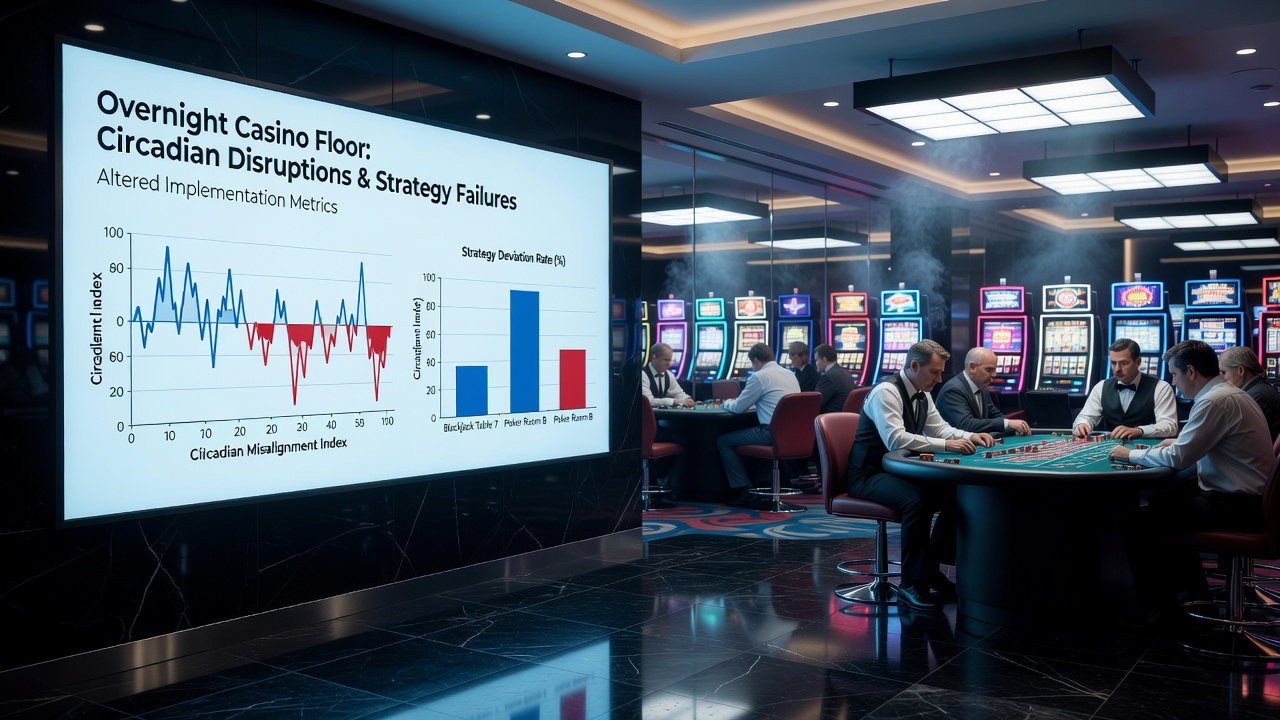
Casino operations run continuously yet the human body follows internal clocks that evolved around daylight cycles and these rhythms create measurable effects on performance when workers stay awake through the night. Overnight floor activities involve dealers executing game procedures, supervisors monitoring player behavior, and security teams coordinating responses while players attempt to apply betting systems or card strategies. Research from sleep science labs shows that misalignment between circadian rhythms and work schedules alters attention, memory recall, and risk evaluation, all of which feed directly into how strategies get implemented at the tables.
Physiological Mechanisms Behind Overnight Performance Shifts
Core body temperature drops and melatonin levels rise during typical sleep windows, even when individuals remain active under artificial lights, and these changes slow neural processing speed according to chronobiology studies. In casino settings the effect appears in longer reaction times for dealers verifying payouts or supervisors spotting irregularities during high-volume hours after midnight. Data collected from shift-work cohorts indicate that cognitive flexibility declines after 4 a.m., making it harder to switch between multiple game rules or adjust to unexpected player moves. Observers note that progressive fatigue compounds across consecutive night shifts because recovery sleep during daylight hours rarely restores full alertness due to light exposure and social demands.
Impact on Dealer Execution and Table Management
Dealers follow strict procedural sequences for shuffling, dealing, and paying bets yet these sequences require sustained focus that circadian disruption undermines. Studies tracking error rates in simulated gaming environments found increased deviations from standard hand motions and payout calculations during the early morning window when melatonin peaks. Floor managers respond by rotating staff more frequently or adding visual checklists, measures that mitigate but do not eliminate the underlying physiological pressure. Security personnel similarly experience altered pattern recognition, leading to different priorities when scanning crowds for suspicious activity compared with daytime shifts.
Player Strategy Application Under Fatigue Conditions
Players who attempt structured approaches such as card counting or progressive betting systems encounter parallel challenges because sustained attention and working memory suffer when internal clocks signal rest. Laboratory experiments on decision-making after sleep restriction demonstrate that participants shift toward simpler heuristics rather than maintaining complex calculations once fatigue accumulates. On the casino floor this translates into fewer accurate deviations from basic strategy charts or premature abandonment of planned bankroll management rules. Data from gaming research groups in Australia and Canada show that voluntary session lengths shorten after 2 a.m. among regular players, coinciding with reported drops in perceived control over outcomes.
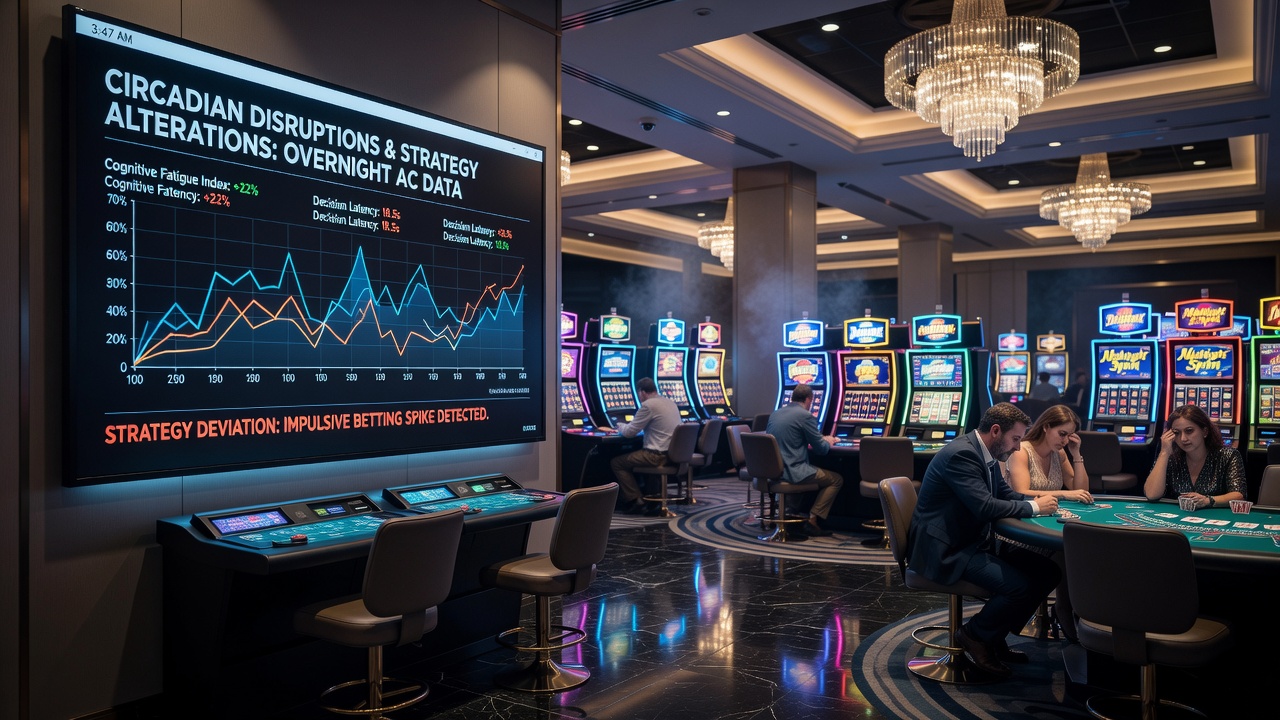
July 2026 observations from multiple North American properties recorded similar patterns during extended holiday weekends when overnight traffic increased yet staff reported heightened difficulty maintaining consistent application of promotional rules across tables. Regulatory filings from state gaming commissions note that incident logs cluster between 3 a.m. and 6 a.m., a timeframe that overlaps with documented circadian troughs rather than peak player volume alone.
Operational Adjustments Observed Across Properties
Properties have introduced lighting adjustments that mimic daylight spectra during shift transitions and scheduled brief rest breaks aligned with individual chronotypes when feasible. Training programs now incorporate modules on recognizing personal alertness dips so that staff can request support before errors compound. Industry associations in the United States and the European Union have circulated guidelines that encourage data-driven scheduling rather than uniform rotation patterns. These steps address the downstream consequences of rhythm disruption while the underlying biology remains unchanged for most workers.
Research Directions and Measurement Approaches
Longitudinal monitoring using wearable devices tracks heart-rate variability and reaction-time metrics among volunteer casino employees, producing datasets that correlate directly with game-log accuracy. University teams in Scandinavia have partnered with operators to test controlled light interventions during overnight hours and preliminary figures reveal modest improvements in sustained attention scores. Such collaborations generate evidence that can inform future standards without relying on anecdotal reports alone.
Conclusion
Circadian rhythm disruption links to measurable changes in how both staff and players execute strategies during overnight casino operations through effects on attention, memory, and decision sequencing. Continued collection of performance metrics alongside physiological data offers pathways for refining schedules and support systems that respect biological constraints while maintaining operational continuity across all hours.