Seasonal Shifts in Player Focus Across Global Digital Table Game Networks
Written by Xander Roth · Sep 23, 2026
Seasonal Shifts in Player Focus Across Global Digital Table Game Networks
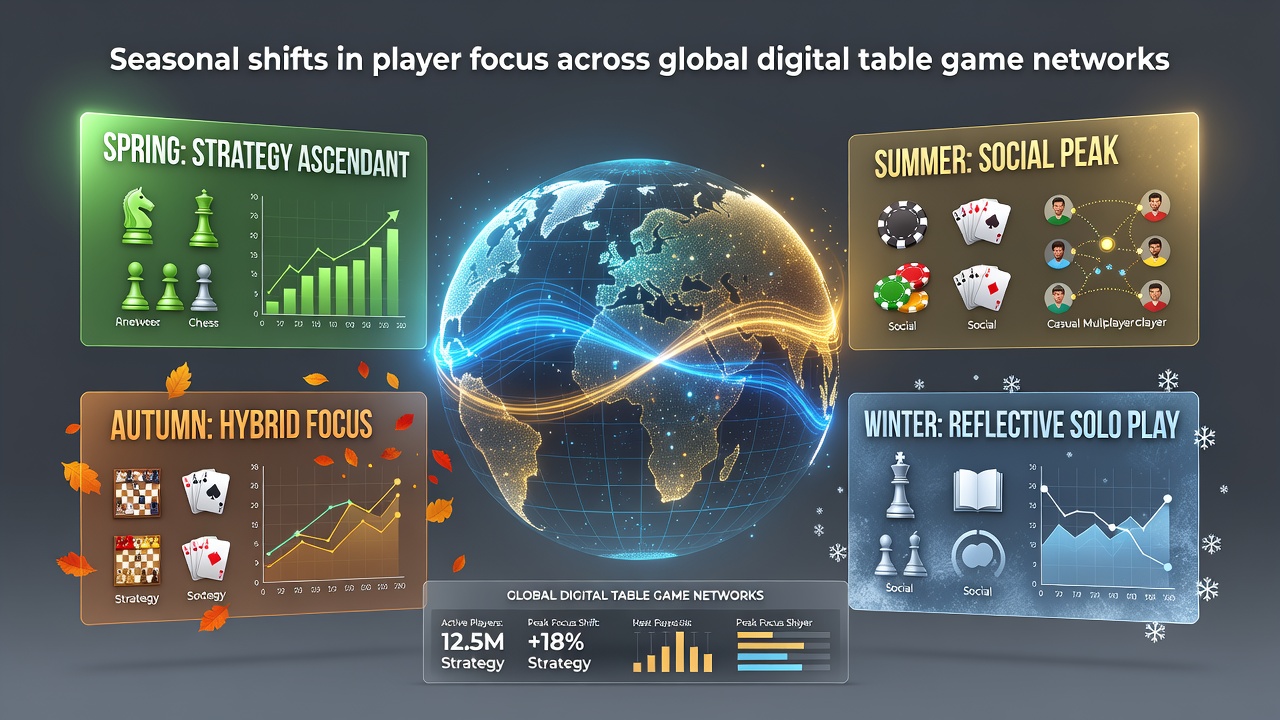
Digital table game networks experience measurable changes in player engagement as seasons progress, with data from multiple regions revealing consistent patterns in game selection and session duration. Researchers tracking these networks note that winter months often coincide with increased focus on strategy-heavy options such as poker variants and blackjack, while summer periods see broader distribution across quicker-play formats like roulette and baccarat. These shifts appear tied to external factors including weather conditions, holiday schedules, and regional leisure trends rather than any single platform policy.
Winter Concentration on Strategic Table Games
Network analytics from the 2025-2026 winter season show elevated participation rates in multi-player poker tables across North American and European servers, with session lengths extending by an average of 22 minutes compared to autumn baselines. Canadian regulatory filings indicate that Ontario-licensed platforms recorded a 17 percent rise in blackjack table occupancy during December and January, coinciding with reduced daylight hours and indoor activity preferences. Observers tracking user behavior across these systems find that players migrate toward formats requiring deeper decision trees when external temperatures drop, and similar trends surface in Scandinavian markets where snow cover limits outdoor alternatives.
Summer Distribution Across Faster-Play Options
As temperatures rise, data from the same networks reveals a pivot toward shorter-cycle games, particularly on mobile interfaces. Australian Communications and Media Authority statistics from the 2025-2026 summer quarter documented a 14 percent uptick in roulette and baccarat sessions among users in New South Wales and Victoria, with many connecting during evening hours after daytime outdoor commitments. Platform operators in the Asia-Pacific region report parallel movements, where afternoon peak traffic shifts earlier in the day during June through August due to school holidays and vacation schedules altering typical login windows.
Southern Hemisphere Contrasts and Cross-Equatorial Patterns
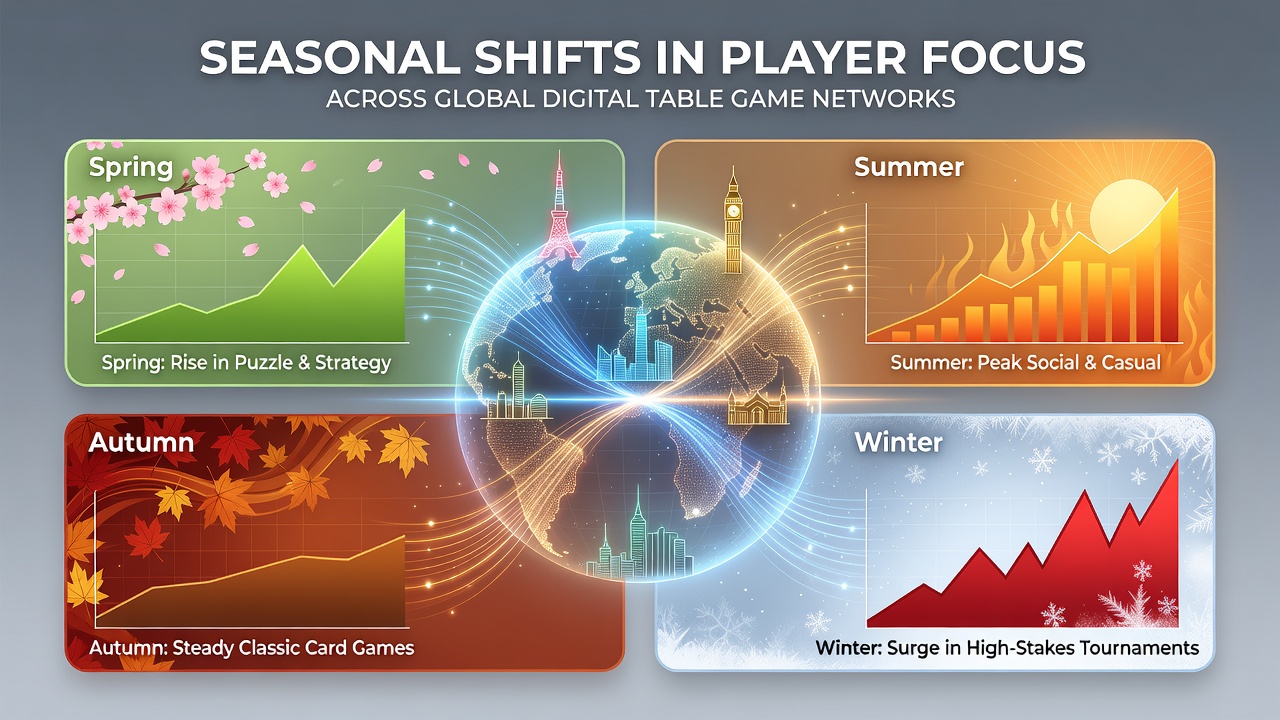
While northern markets settle into winter routines, southern operators observe inverted behaviors. South African and Australian networks experience their highest strategic game engagement during local winter months of June to August, yet the overall volume remains lower than northern peaks because of differing population densities on major platforms. Cross-platform studies compiled by academic teams at the University of Nevada, Reno highlight that global operators must account for these hemispheric offsets when allocating server resources, since September 2026 projections already anticipate a gradual return toward poker tables in the north alongside sustained mobile roulette activity in the south.
Holiday and Event Influences on Network Traffic
Major calendar events overlay these seasonal baselines and produce short-term spikes that operators track separately. Thanksgiving and Christmas periods in North America correlate with extended evening sessions across table game categories, whereas summer music festivals in Europe coincide with fragmented daytime logins on portable devices. Data aggregated through 2026 shows that these event-driven changes rarely override the broader seasonal direction but do amplify specific game preferences for one to three weeks at a time. Platform metrics indicate that users who maintain consistent accounts across multiple seasons adjust their game selection within the first week of each meteorological shift, suggesting habit formation rather than random variation.
September 2026 Transition Indicators
Early September 2026 logs from major networks already display the initial stages of autumnal movement, with poker table occupancy climbing in North American time zones while southern markets maintain elevated roulette volumes ahead of their spring transition. Industry reports compiled from European and Asian operators confirm that these September adjustments typically stabilize within 14 days, allowing prediction models to allocate dealer staffing and promotional budgets accordingly. Those monitoring aggregate traffic note that September serves as a reliable bridge month where both hemispheres exhibit mixed preferences before settling into the next dominant pattern.
Conclusion
Global digital table game networks demonstrate repeatable seasonal realignments driven by environmental and calendar factors, with winter favoring extended strategic play and summer supporting quicker mobile sessions. Regional data from regulatory bodies and academic sources continue to validate these patterns through 2026, enabling operators to anticipate resource needs without relying on subjective forecasts. As networks expand, the consistency of these shifts across hemispheres provides a factual basis for capacity planning and game offering adjustments.