Strategic Sequencing of Promotional Credits with Volatility Thresholds in Live Dealer Sequences
Written by Dana Schmitz · Jun 17, 2026

Strategic Sequencing of Promotional Credits with Volatility Thresholds in Live Dealer Sequences
Operators in regulated gaming markets apply structured approaches to promotional credits that align bonus releases with measured volatility levels during live dealer sessions, and this practice draws from operational data collected across multiple platforms in 2025 and into June 2026.
Live dealer sequences typically involve real-time interactions with streamed tables for games such as blackjack, roulette and baccarat where credit allocation follows predefined thresholds that adjust based on game variance metrics tracked by backend systems.
Core Mechanics of Credit Sequencing
Systems release promotional credits in timed segments rather than lump sums so that each portion activates only after the session volatility index crosses or holds below a set parameter, and analysts track these indices through standard deviation calculations on bet outcomes over rolling windows of 50 to 200 hands.
Threshold settings often sit between 1.8 and 3.2 on normalized volatility scales with lower values triggering conservative credit releases that favor table minimum bets while higher readings permit larger increments once session data stabilizes.
Integration with Live Dealer Platforms
Platform providers embed sequencing logic directly into dealer management software which communicates with player account ledgers to pause or advance credit tranches automatically, and this integration reduces manual oversight while maintaining compliance logs required by oversight bodies.
Data collected from European and North American sites shows average session lengths extending by 12 to 18 percent when thresholds govern credit flow compared with unrestricted promotional models, according to figures compiled by the New Jersey Division of Gaming Enforcement.
Threshold Calibration and Data Inputs
Calibration draws on historical hand histories, dealer rotation patterns and player stake distributions with algorithms updating thresholds weekly to reflect shifts in table traffic or rule variations introduced by individual studios.
Operators monitor inputs such as hit frequency on side bets, dealer upcard distributions and streak lengths because these elements directly influence the volatility score that gates the next credit release, and adjustments occur through automated scripts that reference pre-approved parameter bands.
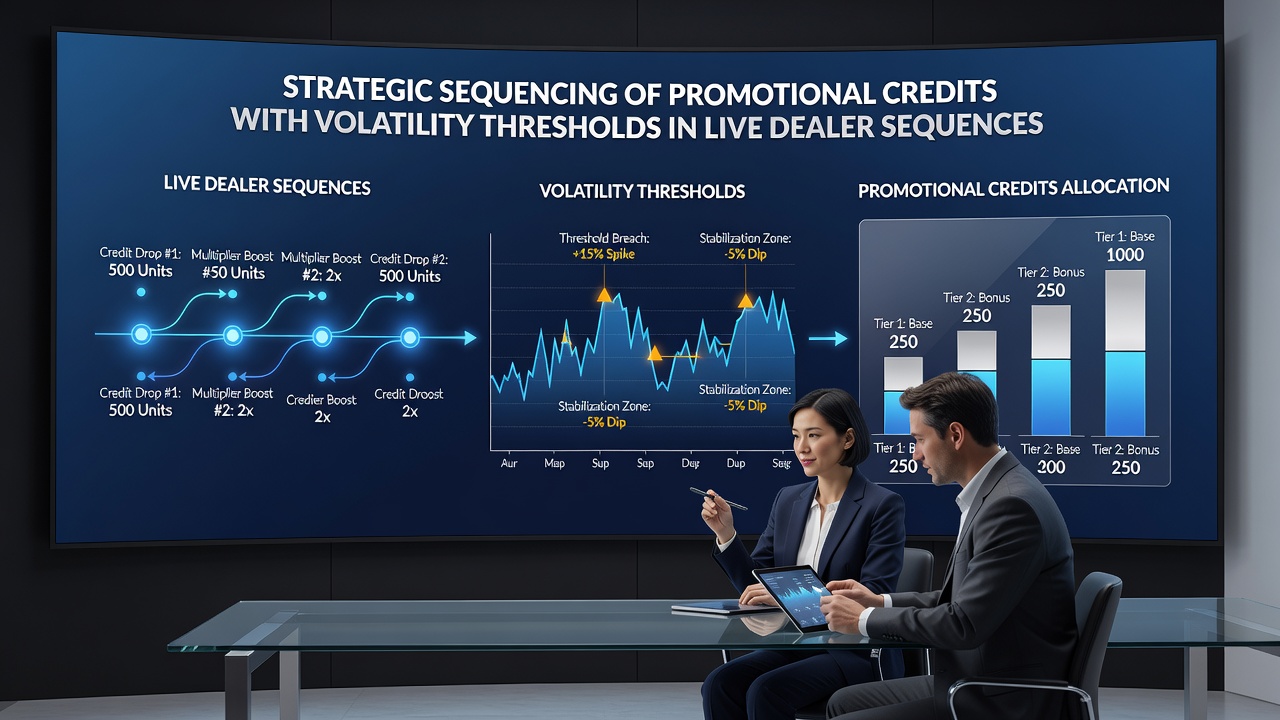
One documented implementation at a multi-studio provider in the Asia-Pacific region adjusted thresholds dynamically during peak evening hours in June 2026 after observing elevated variance on baccarat commission bets, resulting in a measured 7 percent reduction in early credit depletion rates across tracked accounts.
Regulatory Considerations Across Jurisdictions
Regulators in several markets require operators to file threshold parameters and sequencing rules as part of internal control submissions so that promotional mechanics remain transparent and auditable, and reviewers examine whether releases could inadvertently encourage extended play beyond intended limits.
The Nevada Gaming Control Board maintains public guidelines on bonus structures that include provisions for volatility-linked features, and similar expectations appear in frameworks issued by the Alcohol and Gaming Commission of Ontario which emphasize clear player disclosures about how credits activate.
Observed Patterns in Session Outcomes
Session reports indicate that sequenced credits correlate with steadier bet sizing throughout a live dealer engagement because players receive incremental top-ups only after demonstrated stability rather than at the outset, and this pattern appears consistently across both high-limit and mass-market tables.
Retention metrics tracked over six-month periods show repeat visit rates holding within a narrow band when volatility gates remain active, whereas unrestricted credits sometimes produce sharper drop-offs once initial balances reach zero.
Conclusion
Strategic sequencing of promotional credits tied to volatility thresholds continues to evolve within live dealer environments as operators refine algorithms against fresh data sets and regulatory feedback, and the approach remains grounded in measurable session statistics rather than fixed schedules. Continued monitoring through June 2026 and beyond will likely produce additional parameter adjustments as studios expand their live offerings and data collection capabilities mature.