Tracing Atmospheric Pressure Shifts and Their Measurable Links to Roulette Ball Trajectories in Elevated Casino Venues
Written by Dana Schmitz · Aug 26, 2026
Tracing Atmospheric Pressure Shifts and Their Measurable Links to Roulette Ball Trajectories in Elevated Casino Venues
Atmospheric pressure changes occur regularly at casino locations situated above 1,500 meters, where thinner air alters the resistance encountered by a spinning roulette ball during each round. Facilities in regions such as the Colorado Rockies and the Swiss Alps maintain continuous barometric logging systems that record these fluctuations alongside wheel performance data, allowing operators to track correlations between pressure readings and ball deceleration patterns. Observers note that pressure drops of 5 to 10 hectopascals can shift the time a ball remains in orbit by fractions of a second, which in turn influences the final sector where the ball settles after contacting the rotor dividers.
Physics Behind Pressure and Ball Dynamics
Air density decreases as elevation rises, reducing the drag force that opposes the ball's forward motion and the frictional effects within the wheel head. Researchers at institutions studying fluid mechanics have documented how lower pressure extends the ball's glide phase while simultaneously modifying the bounce angle upon impact with numbered pockets. Data collected from calibrated sensors at multiple sites show that these aerodynamic adjustments remain consistent across wheel models when temperature and humidity stay within controlled indoor ranges. Engineers calibrate tracking software to account for these variables because even small density shifts produce measurable deviations in drop zones over thousands of spins.
Monitoring Systems Deployed at Altitude
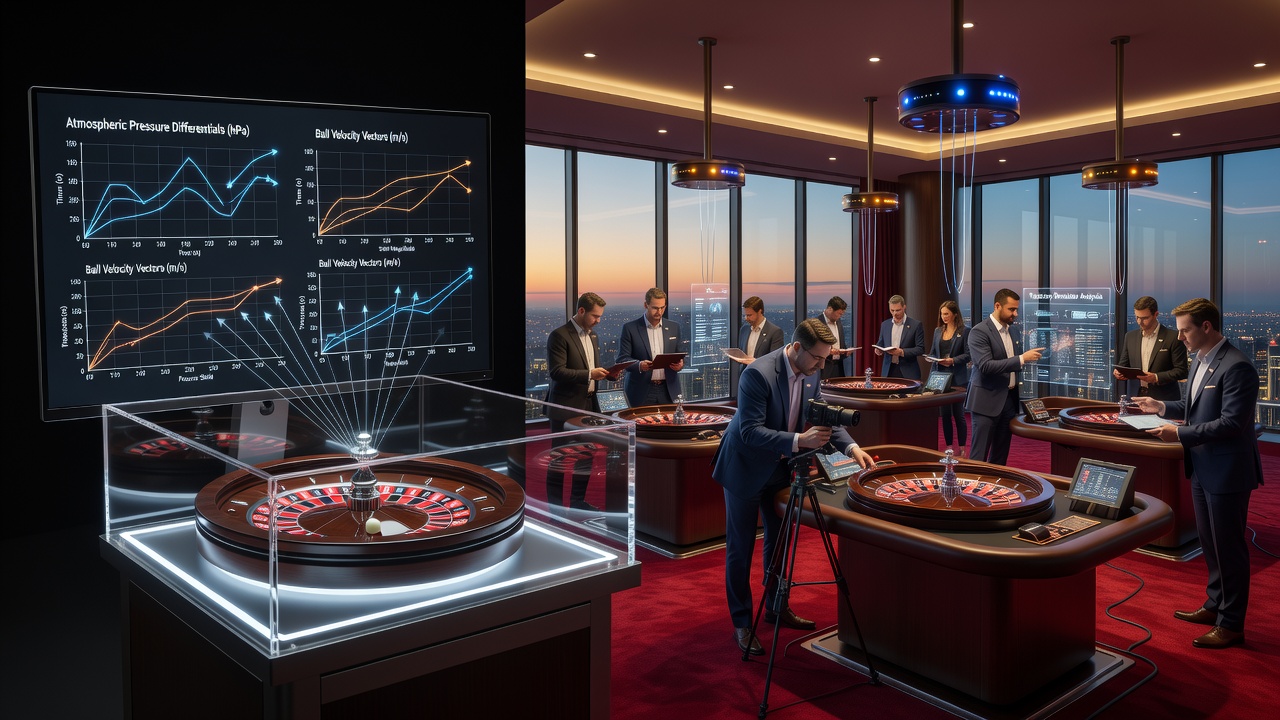
Casino engineering teams install arrays of precision barometers alongside high-speed cameras that capture ball velocity at 1,000 frames per second. The resulting datasets link pressure readings taken every 15 minutes with trajectory coordinates derived from image analysis. In August 2026 several properties reported synchronized pressure troughs that coincided with extended ball flight times, prompting technicians to adjust rotor speed settings within manufacturer tolerances. These integrated systems feed information into central databases maintained by gaming equipment suppliers, enabling pattern recognition across different elevation bands.
One installation at a venue near 2,400 meters elevation recorded 47 instances during a single month where pressure changes exceeding 8 hectopascals aligned with statistically notable shifts in ball landing distribution. Maintenance logs indicate that wheel heads undergo more frequent leveling checks at such sites because reduced air density can amplify minor surface imperfections into observable trajectory variances.
Comparative Data from Lower Elevation Sites
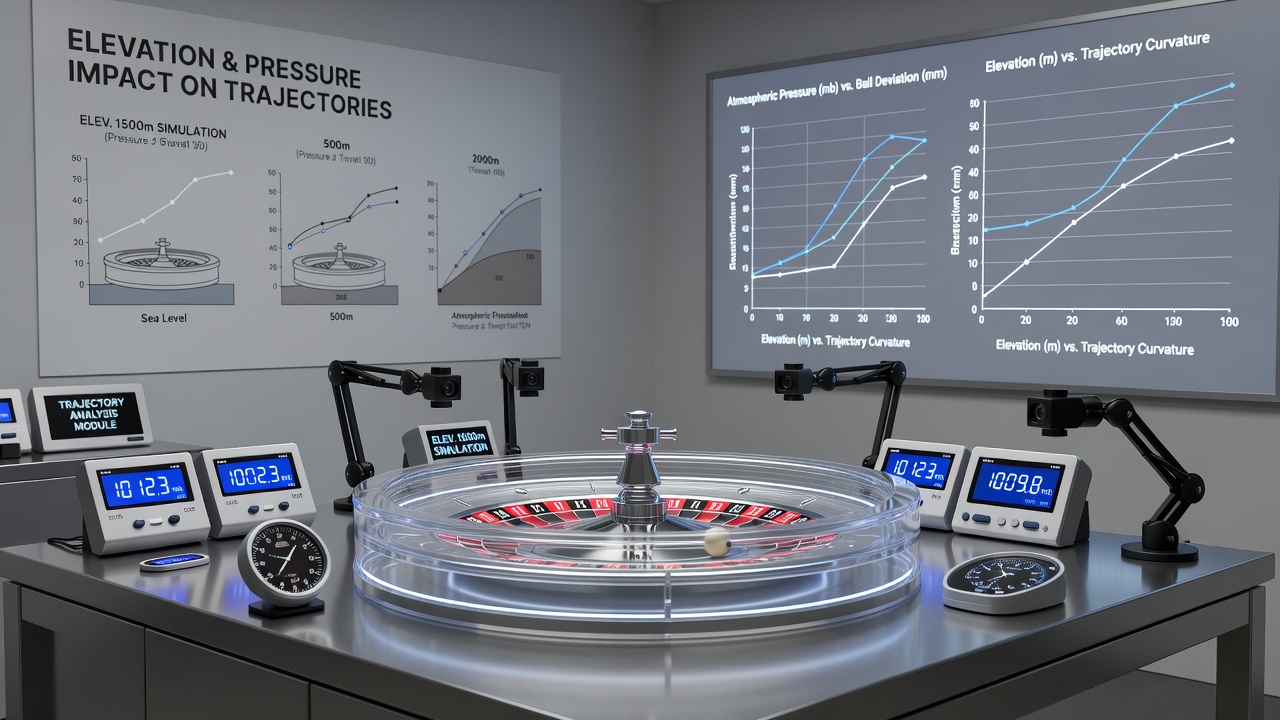
Facilities operating near sea level experience narrower pressure ranges and correspondingly smaller trajectory variations. Comparative studies compiled by equipment certification laboratories reveal that ball deceleration rates at 300 meters differ measurably from those recorded above 2,000 meters under identical wheel speeds. Operators cross-reference these findings with meteorological archives to isolate indoor climate control effects from external atmospheric events. The distinction helps engineering crews determine whether observed deviations stem from pressure alone or from combined factors including humidity spikes.
Regulatory and Equipment Standards
Gaming control boards in jurisdictions that include high-altitude casinos require periodic verification of wheel randomness using standardized test protocols. These protocols incorporate atmospheric compensation factors derived from long-term sensor arrays. Certification reports issued by independent testing facilities document that pressure-adjusted randomness thresholds remain within acceptable limits when equipment receives proper calibration. Industry associations publish guidelines that advise operators to log environmental data alongside compliance testing results, creating audit trails that extend across multiple regulatory regions.
Equipment manufacturers incorporate pressure sensors directly into some modern wheel monitoring packages, allowing real-time compensation algorithms to adjust displayed statistics. Data from these integrated units contribute to broader industry reports that track performance metrics across elevation gradients.
Research Collaborations and Ongoing Measurements
University physics departments have partnered with casino technical teams to refine models of ball aerodynamics under varying pressure conditions. Published papers detail laboratory replications of casino wheel environments using wind tunnels calibrated to simulate 2,000-meter altitude densities. Findings from these controlled experiments align with field data gathered at operating venues, confirming that pressure-induced trajectory shifts follow predictable fluid dynamics equations. Observers note that continued data collection through 2026 and beyond will further refine predictive algorithms used in both regulatory compliance and equipment maintenance schedules.
Conclusion
Atmospheric pressure monitoring has become a standard component of roulette wheel management at elevated casino venues because measurable links exist between air density and ball trajectories. Sensor networks, comparative studies, and regulatory requirements together establish systematic approaches to documenting and compensating for these environmental effects. Continued collection of synchronized pressure and trajectory data supports consistent wheel performance across different elevation levels.