Tracing the Evolution of Player Psychology Through Decades of Changing Casino Floor Designs
Written by Dana Schmitz · Jun 24, 2026
Tracing the Evolution of Player Psychology Through Decades of Changing Casino Floor Designs
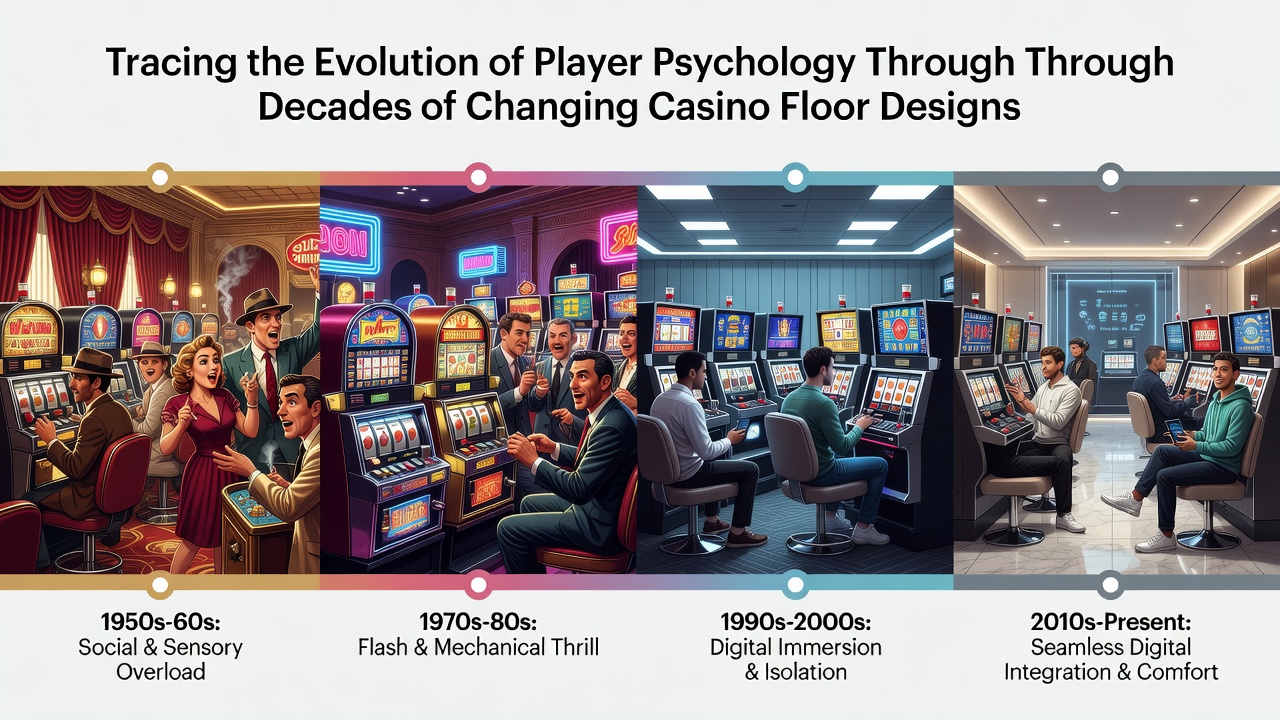
Casino floor designs have shifted dramatically since the 1940s, and those changes have directly shaped how players perceive time, risk, and reward. Early layouts in Las Vegas featured wide aisles and visible exits that kept visitors aware of their surroundings, yet operators soon realized enclosed pathways increased session lengths. Historical data compiled by the Nevada Gaming Control Board shows average play duration rose as designs grew more labyrinthine during the 1960s and 1970s. Designers introduced low ceilings, dimmer lighting, and winding paths that removed external time cues. Players encountered slot machines first, then table games deeper inside the property. This sequence funneled newcomers toward higher-volatility machines before they reached skill-based options. Studies from the University of Nevada, Las Vegas documented corresponding increases in time-on-device metrics once these patterns became standard. By the 1980s, carpet patterns featured busy, repetitive motifs that discouraged players from looking down at their watches. Sound design layered electronic chimes with distant jackpot bells, creating an auditory loop that masked individual losses. Regulatory filings from that era indicate casinos tracked these environmental tweaks against revenue per square foot, confirming measurable lifts in handle. The 1990s brought themed environments and larger footprints. Properties like those on the Las Vegas Strip added attractions such as indoor canals and erupting volcanoes to extend dwell time. Floor plans deliberately routed foot traffic past rows of progressive slots whose jackpot counters climbed visibly, reinforcing the perception of imminent wins. Observers noted that players lingered longer near these displays even when overall return-to-player percentages remained unchanged. Digital integration arrived in the early 2000s. Touchscreen terminals replaced mechanical reels, and centralized systems allowed real-time adjustment of machine density. Operators could now cluster high-performing units in high-traffic zones while moving underperformers to quieter corners. Data collected across multiple jurisdictions revealed that strategic repositioning alone could boost daily revenue without altering game mathematics. Modern floors incorporate biometric and behavioral tracking. Sensors count footsteps and dwell times at specific banks, feeding algorithms that suggest layout tweaks. In June 2026 several properties in Nevada and New Jersey tested dynamic lighting zones that shift color temperature based on occupancy levels. Early telemetry indicates these zones sustain engagement without increasing self-reported fatigue. 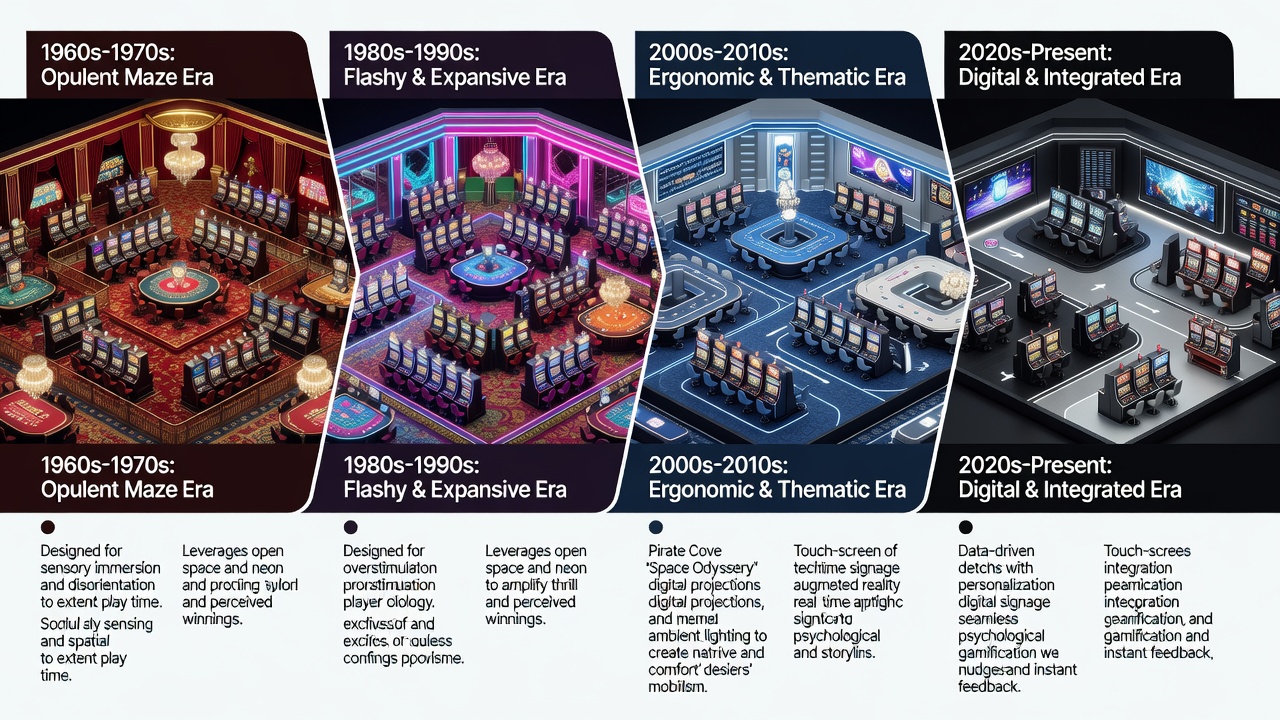 Research from the Canadian Centre on Substance Use and Addiction examined how maze-like configurations affect decision-making speed. Participants in simulated environments made faster betting choices when exits were obscured, a pattern consistent with field observations in operating casinos. The same report noted that players in open layouts paused more often between decisions, suggesting greater awareness of elapsed time. Asian markets introduced another layer. Integrated resorts in Macau and Singapore adopted multi-level designs where VIP areas sit above mass-market floors. Escalators and elevators create vertical circulation that segments player types, while shared jackpot networks span both levels. Figures released by Singapore's Casino Regulatory Authority show higher average bet sizes on upper floors, attributed partly to the psychological separation from street-level activity. Non-gaming amenities now influence floor psychology as well. Restaurants and bars positioned near exits function as rewards after extended play sessions. Wayfinding studies conducted by the American Gaming Association found that clear signage to dining areas paradoxically increased return visits to gaming zones, because players viewed the overall experience as balanced rather than purely extractive. Mobile integration adds a further dimension. Many properties now offer apps that display real-time machine availability and wait times for table games. These tools reduce decision friction once a player enters the building, yet they also extend the planning phase before arrival. Operators report that app users spend more total time on property because pre-arrival anticipation carries into physical engagement. Sustainability features are emerging in 2026 designs. Natural light wells and green walls appear in newer properties, softening the traditional sensory isolation. Early feedback from facilities in Australia suggests these elements maintain session lengths while lowering reported stress levels, although long-term revenue impact remains under study. Throughout these decades, the core mechanism remains constant: each design choice manipulates attention, memory, and perceived control. From open 1950s showrooms to sensor-driven 2026 environments, operators continue refining spatial psychology to align player behavior with revenue goals. The evolution shows no sign of slowing as data collection grows more granular and regulatory scrutiny of player protection measures intensifies.
Casino floor designs have shifted dramatically since the 1940s, and those changes have directly shaped how players perceive time, risk, and reward. Early layouts in Las Vegas featured wide aisles and visible exits that kept visitors aware of their surroundings, yet operators soon realized enclosed pathways increased session lengths. Historical data compiled by the Nevada Gaming Control Board shows average play duration rose as designs grew more labyrinthine during the 1960s and 1970s. Designers introduced low ceilings, dimmer lighting, and winding paths that removed external time cues. Players encountered slot machines first, then table games deeper inside the property. This sequence funneled newcomers toward higher-volatility machines before they reached skill-based options. Studies from the University of Nevada, Las Vegas documented corresponding increases in time-on-device metrics once these patterns became standard. By the 1980s, carpet patterns featured busy, repetitive motifs that discouraged players from looking down at their watches. Sound design layered electronic chimes with distant jackpot bells, creating an auditory loop that masked individual losses. Regulatory filings from that era indicate casinos tracked these environmental tweaks against revenue per square foot, confirming measurable lifts in handle. The 1990s brought themed environments and larger footprints. Properties like those on the Las Vegas Strip added attractions such as indoor canals and erupting volcanoes to extend dwell time. Floor plans deliberately routed foot traffic past rows of progressive slots whose jackpot counters climbed visibly, reinforcing the perception of imminent wins. Observers noted that players lingered longer near these displays even when overall return-to-player percentages remained unchanged. Digital integration arrived in the early 2000s. Touchscreen terminals replaced mechanical reels, and centralized systems allowed real-time adjustment of machine density. Operators could now cluster high-performing units in high-traffic zones while moving underperformers to quieter corners. Data collected across multiple jurisdictions revealed that strategic repositioning alone could boost daily revenue without altering game mathematics. Modern floors incorporate biometric and behavioral tracking. Sensors count footsteps and dwell times at specific banks, feeding algorithms that suggest layout tweaks. In June 2026 several properties in Nevada and New Jersey tested dynamic lighting zones that shift color temperature based on occupancy levels. Early telemetry indicates these zones sustain engagement without increasing self-reported fatigue.
Research from the Canadian Centre on Substance Use and Addiction examined how maze-like configurations affect decision-making speed. Participants in simulated environments made faster betting choices when exits were obscured, a pattern consistent with field observations in operating casinos. The same report noted that players in open layouts paused more often between decisions, suggesting greater awareness of elapsed time. Asian markets introduced another layer. Integrated resorts in Macau and Singapore adopted multi-level designs where VIP areas sit above mass-market floors. Escalators and elevators create vertical circulation that segments player types, while shared jackpot networks span both levels. Figures released by Singapore's Casino Regulatory Authority show higher average bet sizes on upper floors, attributed partly to the psychological separation from street-level activity. Non-gaming amenities now influence floor psychology as well. Restaurants and bars positioned near exits function as rewards after extended play sessions. Wayfinding studies conducted by the American Gaming Association found that clear signage to dining areas paradoxically increased return visits to gaming zones, because players viewed the overall experience as balanced rather than purely extractive. Mobile integration adds a further dimension. Many properties now offer apps that display real-time machine availability and wait times for table games. These tools reduce decision friction once a player enters the building, yet they also extend the planning phase before arrival. Operators report that app users spend more total time on property because pre-arrival anticipation carries into physical engagement. Sustainability features are emerging in 2026 designs. Natural light wells and green walls appear in newer properties, softening the traditional sensory isolation. Early feedback from facilities in Australia suggests these elements maintain session lengths while lowering reported stress levels, although long-term revenue impact remains under study. Throughout these decades, the core mechanism remains constant: each design choice manipulates attention, memory, and perceived control. From open 1950s showrooms to sensor-driven 2026 environments, operators continue refining spatial psychology to align player behavior with revenue goals. The evolution shows no sign of slowing as data collection grows more granular and regulatory scrutiny of player protection measures intensifies.